

Every year, thousands of B2B companies spend a small fortune to stand in a carpeted box under a giant version of their logo, handing out branded stress balls to people who mostly want the free coffee.
Some of those companies come home with deals that pay for the whole year. Others come home with a bag of business cards, sore feet and a vague sense that it was “good for brand awareness.”
So are trade shows worth it? Sometimes, very much yes. But you should know which kind of show you’re at before you sign the booth contract, not after.
First, add up the real cost
Most companies drastically underestimate what a trade show costs, because they only count the booth space. The real number includes:
- Booth space and any sponsorship package
- Booth design, printing and shipping (and shipping it back)
- Flights, hotels and meals for everyone who goes
- Swag, printed materials and giveaways
- Electricity, internet, furniture rental and the “drayage” fee that nobody understands until they see the invoice
- The salaries of the people at the booth for the days they’re not selling to anyone else
Add it up honestly. Then divide by the number of real sales conversations you expect to have. That’s your cost per conversation, and it’s often eye-watering compared with other channels. If you’re working out next year’s spend, our B2B marketing budget guide can help put it in context.
Five questions to ask before you book
1. Will your ideal customers actually be there?
Not “people in your industry.” Your ideal customers, with buying authority. Ask the organizer for last year’s attendee breakdown by job title and company size. If they can’t give it to you, that tells you something.
2. Can you book meetings in advance?
The best trade show results almost always come from meetings booked weeks ahead, not people wandering past the booth. If you can’t fill at least half your time with pre-booked meetings, think hard.
3. Is there a deal cycle reason to be there?
Some industries really do buy at shows: new product lines are chosen, distributors are signed, annual contracts are discussed over dinner. If your industry works that way, missing the show can cost you. If it doesn’t, the show is mostly a branding exercise.
4. What will you do differently from the 300 other booths?
If your plan is “a banner, a bowl of candy and a tablet for badge scanning,” you’ll look exactly like everyone else. Visitors remember a demo, a conversation or a useful idea. They don’t remember the logo.
5. Would you go if you couldn’t have a booth?
This is the sneaky one. Sometimes the best value at a show is attending: booking meetings, going to the right sessions, hosting a small dinner for ten key prospects. All without the cost of a booth.
How Salesforce stole a show without a booth
When Salesforce was a tiny startup in 2000, its big competitor was Siebel Systems, the giant of customer-relationship software. Salesforce’s pitch was that companies didn’t need to install expensive software anymore. They could just use it online.
So when Siebel held its big user conference, Marc Benioff didn’t buy a booth. Salesforce’s PR firm hired about 25 protesters to march outside, carrying anti-software signs, chanting “software is over” and handing out invitations to Salesforce’s own launch party that night. It got attention from the press and from Siebel’s own customers, and it put Salesforce’s whole positioning on a picket sign. (We’re not saying you should crash a competitor’s event. Please check with a lawyer before you do anything like this. But notice that the stunt was about the customer’s problem, not about Salesforce’s logo.)
The lesson isn’t “do a stunt.” It’s that a show is a place where a lot of your buyers are paying attention at the same time. What you say to them matters far more than how big your booth is.
If you go, make it count
- Set a goal you can measure. “30 qualified meetings and 5 opportunities” beats “raise awareness.”
- Book before you fly. Email prospects and customers three to four weeks before the show with a specific reason to meet.
- Bring the right people. People who can actually answer hard questions, not just whoever was free.
- Give them a reason to stop. A live demo, a quick assessment, a printed checklist they’ll keep. Something useful.
- Follow up within 48 hours. With a personal note that mentions what you talked about. Not a generic “great to meet you at the show!” blast. Make sure the handoff to sales is clean, or your hard-won leads end up in the garbage.
- Measure six months later. Trade show deals take time to close. Track which opportunities came from the show and judge it on revenue, not badge scans.
The follow-up is where trade shows are won or lost
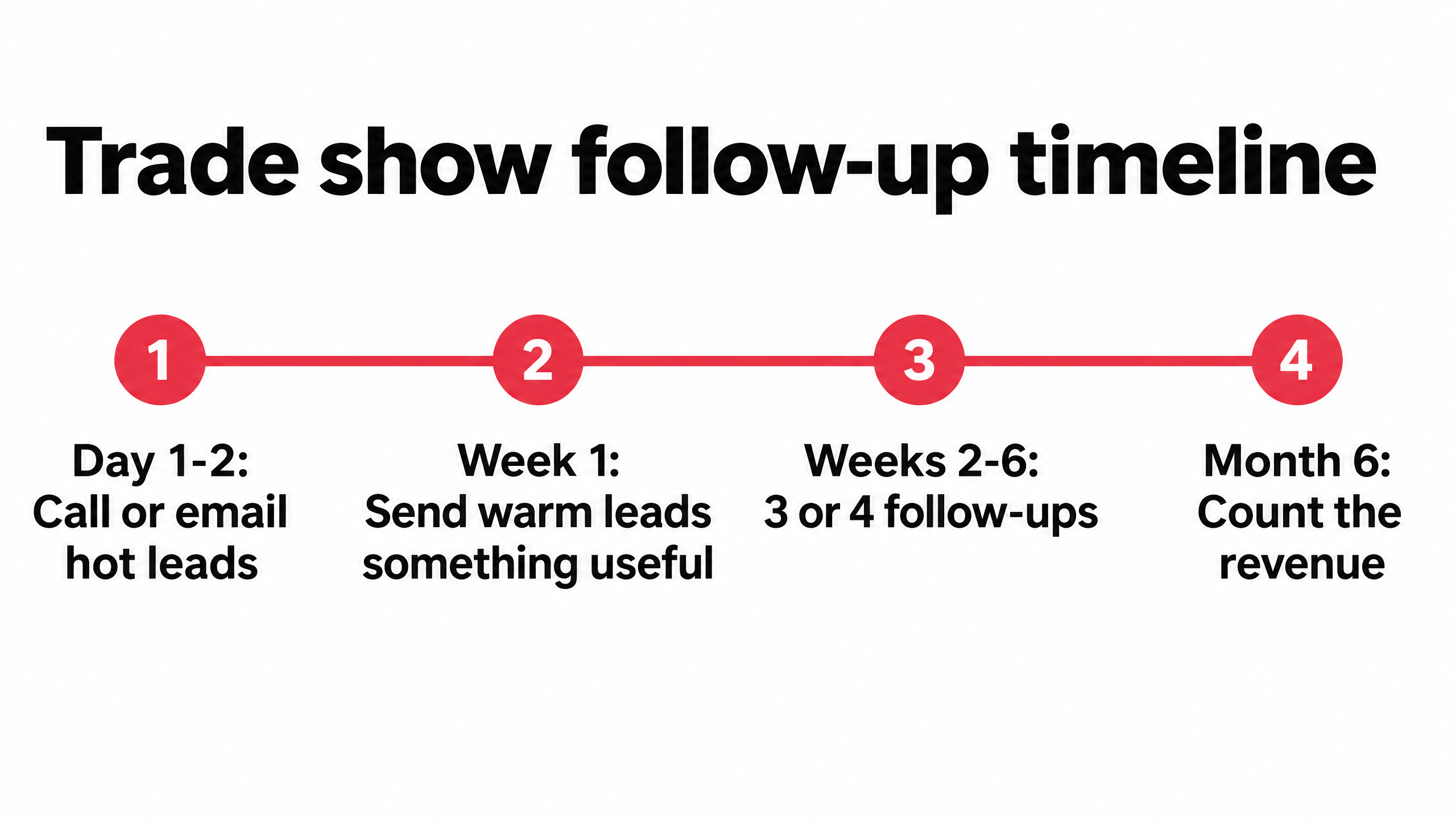
Here’s the uncomfortable truth about most trade shows: the leads don’t die at the booth. They die in a spreadsheet afterwards.
Everyone flies home tired. There’s a week of email to catch up on. The badge scans get exported to a file that sits on someone’s desktop. Two weeks later, a generic “Great to meet you at the show!” email goes out to all 400 contacts at once. By then, the person you had a great conversation with has met 30 other vendors and can’t remember which booth was yours.
All that money you spent on the booth, flights and swag was to start conversations. If you don’t follow up properly, you paid for nothing.
Plan the follow-up before the show
- Decide who owns each lead before you leave. Every contact should have a name next to it: the salesperson who will call them, not “the team.”
- Write the follow-up emails in advance. One for hot leads, one for warm, one for “nice to meet you.” Then all you have to add is the personal detail.
- Book the time. Block the first two days after the show for follow-up only. No catching up on other work first.
Take notes at the booth
A badge scan tells you a name and a company. It doesn’t tell you that they’re replacing their current supplier in March, or that their boss hates long contracts. Write one or two lines on every real conversation, right after it happens, and rate each one hot, warm or cold. Those notes are what make the follow-up personal.
Follow up fast and make it personal
- Hot leads: within 24 to 48 hours. A phone call or a personal email that mentions what you talked about, with a clear next step: “You mentioned the March deadline. Can we book 30 minutes next Tuesday to walk through it?”
- Warm leads: within the first week. Send something genuinely useful, like a case study from a company like theirs or a checklist, plus an easy way to talk.
- Everyone else: add them to your newsletter if they agreed to it, and let your regular content keep you in mind until they’re ready. Most of them won’t be buying this quarter, and that’s normal.
Keep following up
One email is not a follow-up plan. Busy people miss messages, go on holiday and get pulled into fires. Plan for three or four touches over a few weeks, each one adding something new rather than “just checking in.” Stop when they say no, not when you get bored.
Hand off cleanly to sales
If marketing collects the leads and sales is supposed to call them, agree beforehand on what counts as a real lead and how fast sales will act on it. Otherwise you’ll end up having the classic argument about whether the leads were garbage or nobody called them.
Track every lead to the end
Tag every show contact in your CRM with the event name. Six months later, you’ll be able to see exactly how many meetings, deals and dollars came from the show. That’s the number that tells you whether to book the booth again next year.
The bottom line
Trade shows are worth it when your best buyers are there, when you can book real meetings, and when you show up with something worth stopping for. They’re not worth it when the main goal is to see your logo really, really big.
Nobody walks the show floor looking for your logo. They’re looking for someone who can solve their problem.
