

So you have a business idea, you think it’s awesome, revolutionary! You’ve googled it and no one else has done it… at least no one on the first page of the search results. Within months, you’ve spoken to a few of your closest friends, you’ve devised a plan and you are taking the first steps to make a monetary investment. You’ve got this! It’s going to be a game changer for you! Amazing!! Everyone is being super supportive, you’ve got your logo, of course, you’ve got your website up, you’ve spent hours tirelessly working on graphics and content, you’re spending money on advertising, you’re networking – you are hustling… I won’t go on… BUT nothing is happening. WTF, you’ve got followers, but no sales. You’ve got all your friends still saying “It’s an awesome idea”… but no sales, ok, except your mom. Seriously, WTF!!
Friends can be awesome, and there have been plenty of movements in recent years to support one another, which is awesome. However, with so much support comes a fear of being negative. All of the “You do you’s!” and “You got this girl!”… give us support and motivation, but if it’s a bad idea, even the friends that support you aren’t going to pony up.
Get out of your comfort zone and stop surrounding yourself with people that agree with your conclusions. Find a group that challenges your thoughts and ideas. Send out surveys and ask questions where people can remain anonymous. It’s amazing how nearly everyone’s opinions get a lot more honest when they don’t have to face the recipient.
Hence, the professional focus group. When done correctly, a group of your would-be target market is shown the product, advertisement or elements of your campaign and asked questions by a skilled facilitator to get them talking. You may, or may not, want to be behind the curtain for this part. Honesty can be scary, but it gets you to the goal line faster if you are willing to listen to it and take it as constructive feedback for you and your company to thrive. It can also save your company thousands, if not millions, on a terrible idea.
Why this matters more than you think
When CB Insights looked at why startups die, the top reason wasn’t running out of money or getting beaten by a competitor. It was building something nobody actually needed. That’s the polite version of “everyone said it was a great idea, and then nobody bought it.”
Friends are terrible at spotting that problem because they’re not your customer. They’re not going to pay for your B2B invoicing tool. They don’t run a warehouse. They just like you and want you to be happy, and that’s exactly why their feedback is useless for this.
Even big companies get fooled by the wrong questions
Here’s the twist: asking strangers isn’t enough if you ask the wrong thing. In 1985 Coca-Cola ran taste tests with about 200,000 people, and the new formula won. So they launched New Coke and pulled the original. The backlash was so bad they brought the old formula back within 79 days.
The research answered “which tastes better in a sip?” It never asked “how would you feel if we took your Coke away?” People weren’t buying a flavor. They were buying something they were attached to. The test was huge, and it still missed the point.
How to get honest feedback on a business idea
You don’t need a two-way mirror and a research budget to do this well. A few rules:
- Talk to people who would actually pay. If you sell to HR managers, talk to HR managers. Not your cousin who “works in an office.”
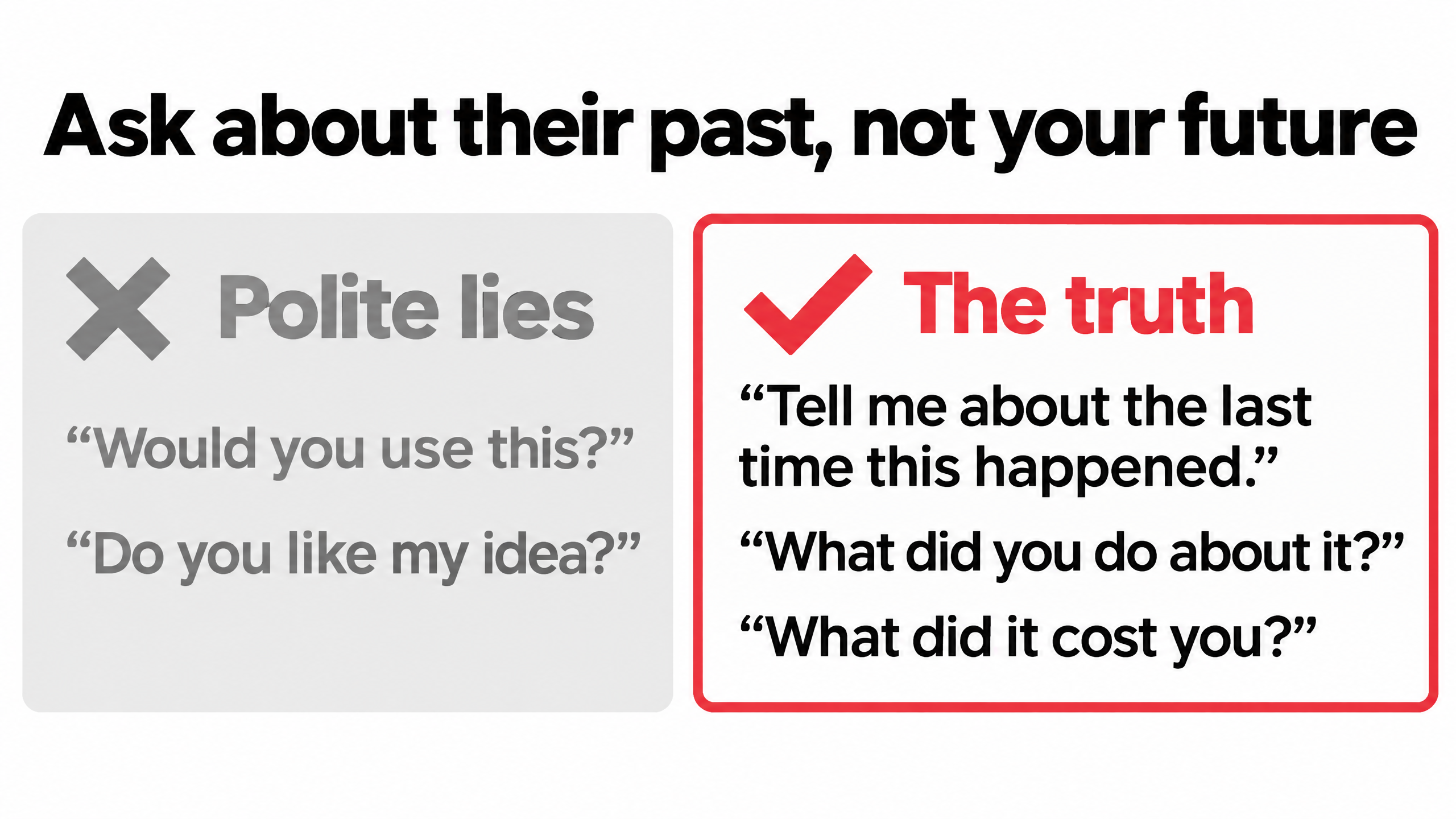
- Ask about their past, not your future. “Would you use this?” gets you polite lies. “Tell me about the last time you dealt with this problem. What did you do? What did it cost you?” gets you the truth. Rob Fitzpatrick’s book The Mom Test is built entirely on this idea, and it’s worth the hour it takes to read.
- Don’t pitch. The minute you start selling, people start being nice. Listen more than you talk.
- Ask for something real. A pre-order, a letter of intent, a paid pilot, even 30 minutes of their time next week. People who won’t give you any of those aren’t customers yet, no matter how much they say they love it.
- Write down the bad news. It’s tempting to remember the three people who loved it and forget the seven who shrugged. The shrugs are the data.
Keep your friends for the launch party. Get your feedback from the people whose money you actually need.
