

Be honest. When was the last time you read a company newsletter all the way through? Not skimmed. Read.
Exactly. Most B2B newsletters land in the inbox with a subject line like “Q3 Company Update: Exciting News Inside!” and they’re deleted in under a second. Inside, there’s usually a photo of the team at a charity golf day, a “welcome to our new hires” section, and a product feature nobody asked about. It’s a newsletter written for the company, not for the reader.
Email is still one of the best channels in B2B. You own the list, nobody’s algorithm decides who sees it, and it lands right where your buyers spend their workday. But only if people want to open it.
First: your open rate is probably lying
Before you judge your newsletter by its open rate, know this. In 2021 Apple launched Mail Privacy Protection, which automatically loads emails in the background for people using Apple Mail. To your email software, that looks like an open, even if the person never looked at it.
The result: open rates went up across the board, and they now tell you a lot less than they used to. If your dashboard says 45% open rate, don’t celebrate yet. Look at clicks, replies, and, most importantly, whether email subscribers turn into conversations and customers.
Why nobody reads your B2B newsletter
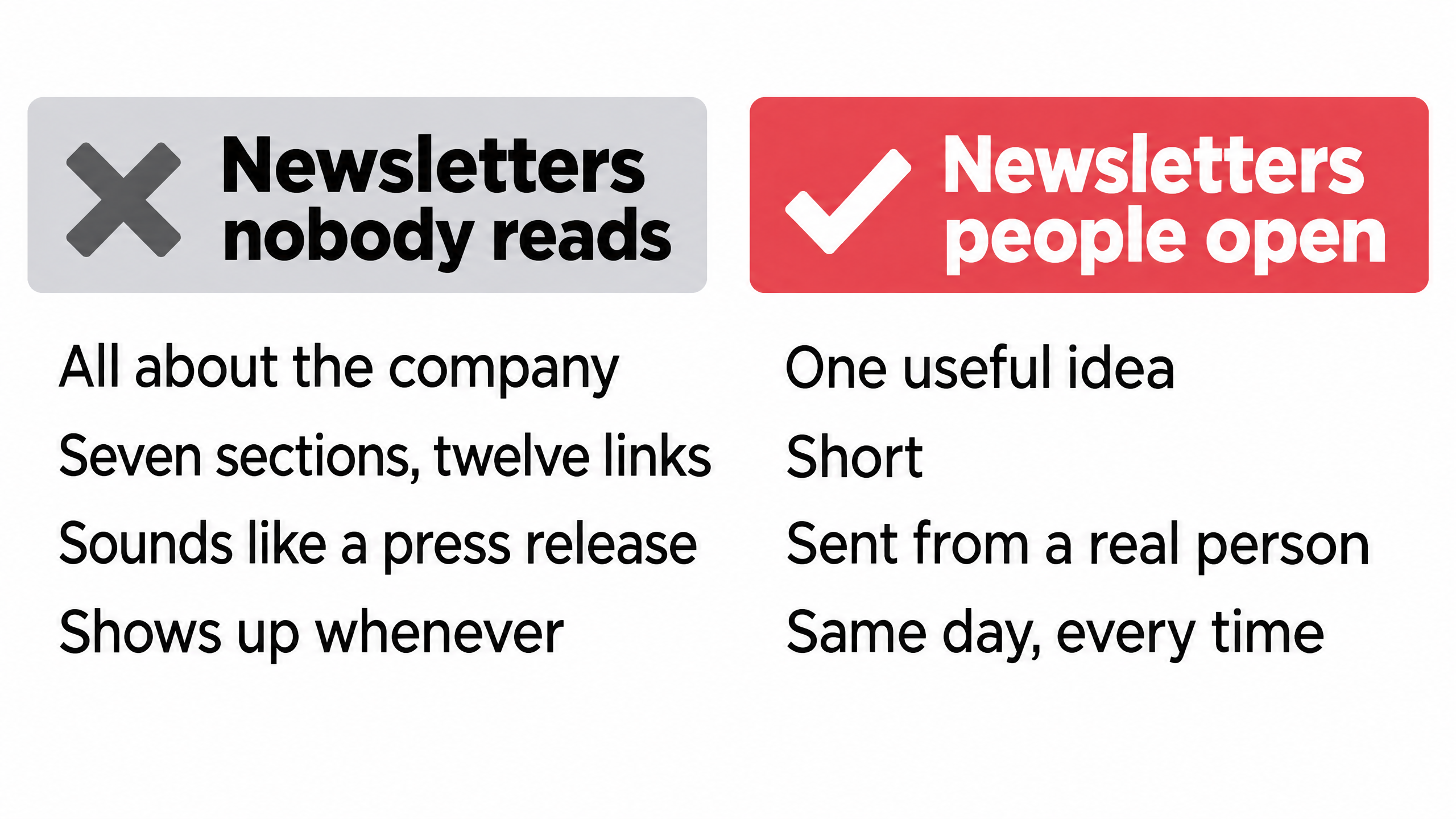
It’s about you
Awards, office moves, new hires, product release notes. Your team cares. Your customers don’t. Every section should answer the reader’s question: “what’s in this for me?”
It’s trying to do everything
Seven sections, twelve links, three calls to action. When everything is important, nothing is. The best newsletters usually have one main idea.
It sounds like a corporation
People open email from people. If your newsletter reads like a press release, it gets treated like one. Write it like one smart person talking to another.
It shows up randomly
Three emails in March, then nothing until a “we’ve missed you!” email in September. Consistency builds a habit. Randomness builds unsubscribes.
What Morning Brew figured out
Morning Brew started in 2015 as a business newsletter written by two college students. It grew to well over a million subscribers, helped along by a referral program that rewarded readers for signing up their friends.
But the referral program only worked because people actually liked the email. Morning Brew took dry business news and made it short, funny and easy to read before your first coffee. Readers shared it because sharing it made them look good. No referral program can save a newsletter people don’t want.
That’s the lesson for B2B: if your newsletter is genuinely useful and a little bit enjoyable, people will read it, forward it to colleagues and remember you when they’re ready to buy.
How to write a B2B newsletter people actually want
- Pick one audience. Not “customers, prospects, partners and investors.” Write for your ideal customer. Everyone else can come along for the ride.
- Lead with one useful idea. A tip, a story, a mistake you’ve seen a client make, a number that surprised you. Something they can use this week.
- Write a subject line that promises something. “The pricing mistake that cost a client $40K” beats “November Newsletter” every time.
- Keep it short. If it takes more than three minutes to read, cut it.
- Send it from a person. A real name, a real reply-to address, and an invitation to hit reply. Replies are the best signal you’ll get.
- Be consistent. Weekly, fortnightly or monthly: pick what you can actually keep up and stick to it.
- Limit the selling. One small, relevant mention of what you offer is fine. A newsletter that’s all pitch is just an ad with an unsubscribe link.
Don’t forget the basics
- Only email people who signed up or have a real business relationship with you, and always include a clear unsubscribe link. Privacy and anti-spam laws (like CAN-SPAM in the US and CASL in Canada) are not optional.
- Clean your list. Remove people who haven’t clicked anything in a year. A smaller, engaged list beats a big, dead one.
- Check it on a phone. Most people will read it there.
The bottom line
Your newsletter isn’t competing with other companies’ newsletters. It’s competing with everything else in your buyer’s inbox, including messages from their boss. Earn the open by being useful, human and consistent. Our one-page B2B marketing plan shows where email fits into the bigger picture.
And please, put the logo in the footer, not as a giant banner at the top. Nobody gives a f* about the banner.
