

For about fifteen years, lululemon was the brand. Black leggings with a little logo on the hip became a uniform from Vancouver, where it started, to everywhere else. At the end of 2023 the stock hit an all-time high of more than $500 a share.
Then shoppers started walking past the leggings wall. Fast.
Here’s what happened, why it happened, and what any B2B company can learn from a yoga pants maker that forgot who it was selling to.
How much market share has lululemon lost?
A lot, and quickly.
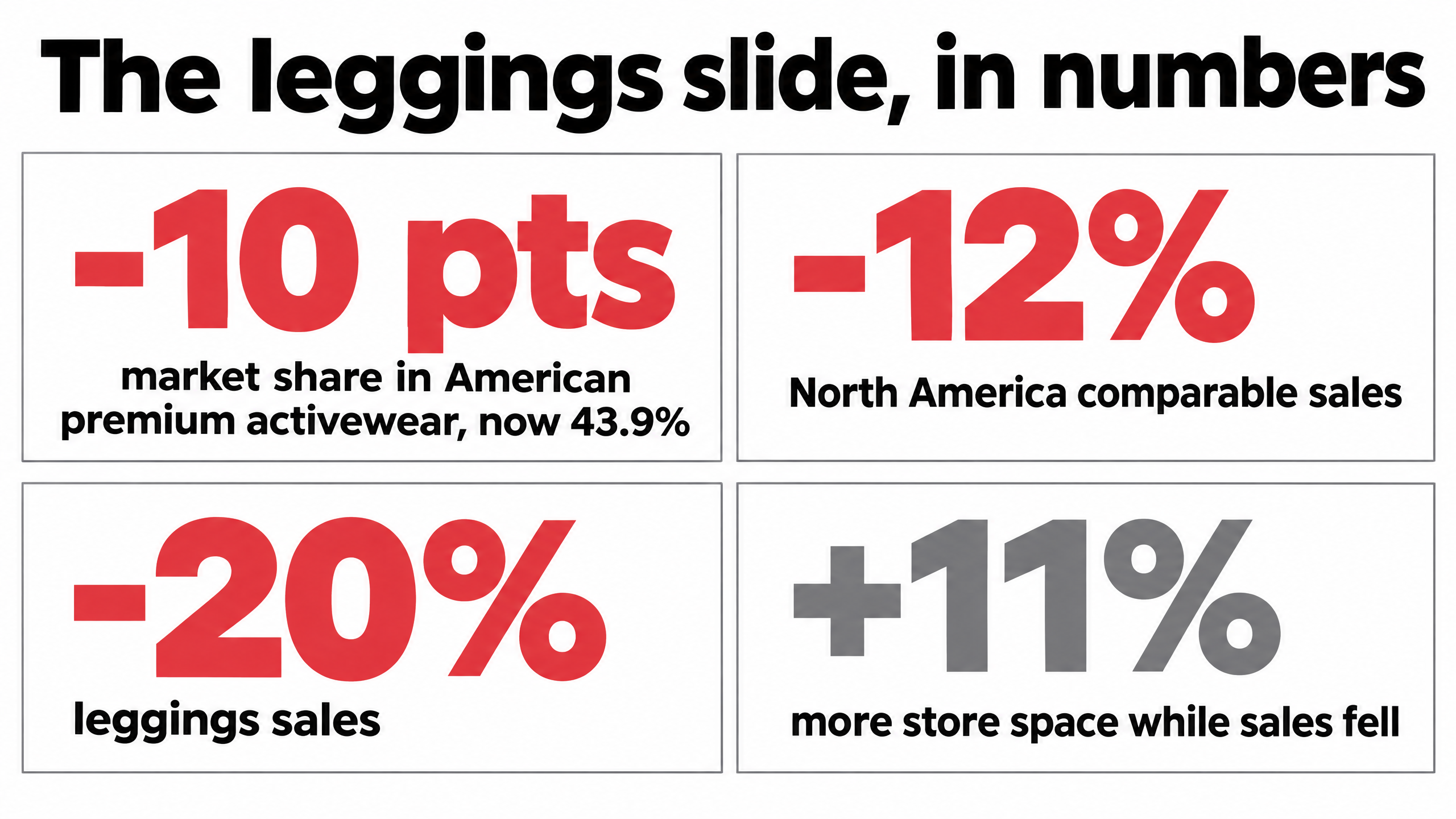
- Its share of the U.S. premium activewear market fell 10 points to 43.9% in August 2026, according to M Science data reported by Reuters via Yahoo Finance. Alo gained 5.9 points. Vuori gained 2.2.
- North America comparable sales fell 12% in Q2 of fiscal 2026. Global comps were down 9% and revenue fell 4% to $2.42 billion.
- Leggings sales were down about 20% as shoppers moved to looser, wide-leg fits.
- Guidance was cut twice and the shares fell to an eight-year low, per Yahoo Finance.
- Store space grew 11% while sales fell. More room to display the stuff people weren’t buying.
One BMO analyst summed it up: “irrelevance with the consumer is showing up in the numbers.” Ouch.
Why is lululemon losing market share?
1. They got predictable (their words, not mine)
In September 2025 then-CEO Calvin McDonald said it himself: “We have become too predictable within our casual offerings and missed opportunities to create new trends,” as Retail Dive reported. Translation: the same black leggings in the same stores, while customers had already moved on.
2. The customer’s taste changed and they kept selling the old thing
Younger shoppers wanted baggy. Wide-leg sweats, loose fits, the “I’m comfortable and I don’t care” look. lululemon had built its entire identity on tight. Being famous for one thing is great right up until people stop wanting that thing.
3. Hungrier competitors listened harder
Alo and Vuori didn’t beat lululemon with bigger logos. They gave a younger customer the styles they actually wanted, with a vibe that felt new. When you’re the market leader, your competitors are studying your customers more closely than you are.
4. Quality slips hurt the one thing that justified the price
People paid $100+ for lululemon leggings because they trusted the quality. In January 2026 the company pulled its “Get Low” leggings after complaints they were see-through, as The Logic covered. It was a repeat of a 2013 see-through scandal. When you charge a premium, every quality miss costs you double.
5. Drama at the top
Founder Chip Wilson took out a full-page ad in the Wall Street Journal in October 2025 calling the company “in a nosedive,” then launched a proxy fight. McDonald left at the end of January 2026. Heidi O’Neill, a former Nike executive, took over as CEO on September 8, 2026. Nothing says “we know where we’re going” like a public fight with your founder.
What B2B brands should learn from lululemon
You might sell software, freight or industrial valves. The lessons still apply.
Your best customers change before your numbers do
By the time a drop shows up in the quarterly report, customers made that decision months ago. Keep talking to them. Ask what they’re buying instead of you, and what’s changed in their world. If you’re not sure how, start with the five-question interview in our features vs. benefits post.
Being the leader makes you lazy
Market leaders stop asking questions. They assume the thing that worked will keep working. In B2B that looks like the same product roadmap, the same pitch deck and the same trade show booth, year after year, while a smaller competitor quietly signs your next ten customers.
More reach doesn’t fix less relevance
lululemon added 11% more store space while sales fell. The B2B version is hiring more reps, buying more ads or entering new regions when the real problem is that your offer isn’t landing. Spending more to show people something they don’t want doesn’t make them want it. (If you’re setting next year’s budget, read this first.)
Your premium price is a promise
If you charge more than the competition, customers expect it to just work. One see-through legging or one botched software release does more damage to a premium brand than to a cheap one, because it breaks the reason people paid extra.
Your logo can’t carry you
lululemon has one of the most recognized logos in retail. It didn’t stop a single shopper from walking out in wide-leg sweats from someone else. Brand recognition buys you attention. It doesn’t buy you relevance.
The bottom line
lululemon isn’t going anywhere. It still owns a huge share of the market and has a new CEO with a mandate to shake things up. But the slide shows how quickly a category leader becomes “that brand my older sister wears.”
Nobody gives a f* about your logo on their hip. They care whether you still get what they want right now. Keep asking, or someone else will.
